
Humans In the Loop: Building Trust in Elections With Bipartisan Messaging
By: Thessalia Merivaki, Ph.D., Associate Teaching Professor & Associate Research Professor, McCourt School of Public Policy & the Massive Data Institute
While many state and local election officials (EOs) are themselves elected through partisan processes, their statutory role is to conduct elections in a nonpartisan manner. Perceptions among the public that EOs act on their partisanship when administering elections has contributed to the decline in trust in the integrity of US elections. Low trust has also coincided with increases in threats and attacks on election officials and the election workforce, who have been retiring in record numbers, resulting in the loss of veteran election talent with significant institutional knowledge.
Despite U.S. elections being more secure than ever, American voters persistently express skepticism about election security as well as the ability of election officials to take their partisan hats off while performing their election duties. This skepticism is colored by party, with Republican voters highly skeptical of their out-partisan election officials, and vice versa. The spillover of polarization into election administration creates a challenge for EOs: How can public trust in elections be built when the election infrastructure itself contains both partisan ((s)election of election officials) and nonpartisan (conduct of elections) elements?
Elections from a PR Lens: Bipartisanship as a Trust-building Messaging Strategy
The increase in elite-driven false narratives about the integrity of U.S. elections, combined with low familiarity among the public about how election procedures are conducted within their states as well as other states, have made a long-lasting impact on voters’ confidence that votes cast are accurately counted. These attitudes are usually apparent when election winners are announced; voters whose preferred candidate loses are more likely to express low confidence that votes were counted as intended (the loser effect). However, these attitudes historically fade over time. In recent years, low trust among the public, and particularly partisan gaps in trust, have raised alarms in the election community because they reflect signs of a democracy in crisis.
In response to disinformation and declining voter confidence, EOs invested in trust-building messaging campaigns to communicate to voters that a. EOs are a trusted source of information, and b. that the election process is secure. These messages were added to EOs’ “voter education toolkit” which primarily included communications about how and where to vote. Trust-building communications were effective in helping mitigate election denial and the loser effect in the 2020 and 2022 federal elections.
In anticipation of the 2024 election, with one of the two major presidential candidates perpetuating distrust in the integrity of the election infrastructure, EOs revised their messaging strategies and focused more on providing greater context when communicating about election security. They explained how election procedures are conducted, who is involved in securing them, and why these protocols ensure that elections are secure. A major emphasis was placed on the checks and balances embedded in elections, noting that processes are conducted on a bipartisan basis as specified in state election law; from how poll workers are recruited and trained, how mail ballots are processed, to how election results are audited and certified.
Tracking EOs Communications: The 2024 Election Officials Communications Tracker
To understand how EOs integrated bipartisan messaging into their trust-building voter communications during the 2024 Presidential election, I leverage data collected from the 2024 Election Officials Communications Tracker. The Tracker monitors and analyzes organic communications from state and local election officials on mainstream social media platforms (Facebook, Instagram, Threads, X, TikTok, YouTube) shared between August 28, 2024 and December 15, 2024, amounting to over 60,000 posts. This timeframe captures the most active election communications period, starting with the National Poll Worker Recruitment Day (August 28, 2024) and ending with state certification of election results (December 15, 2024).
During this period, election officials educated voters about registering to vote, requesting a mail ballot, where to vote, how to serve as poll workers, how to observe election procedures like voting machine testing, vote counting and audits, among other election-related information. They also communicated about outreach activities in different communities, responded to false narratives that circulate online, and shared communications about election security.
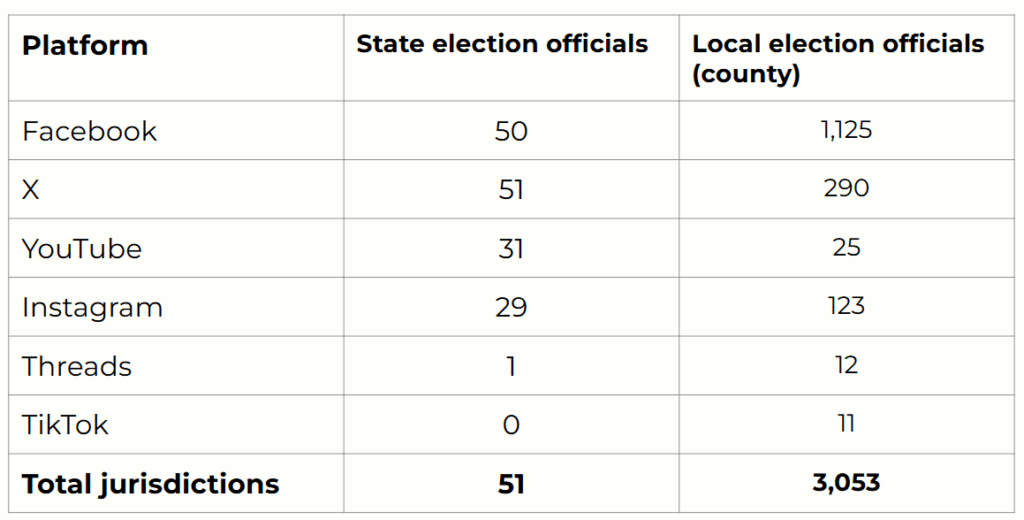
Table 1. Number of state and local EOs by social media platform from the 2024 Election Officials Communications Tracker.
Table 1 shows the presence of state and local EOs that the Tracker covers by platform, which essentially measures the presence of EOs on mainstream social media platforms. As the Table shows, all state officials were present on Facebook and X in 2024 (Ohio maintained two accounts: one from the Secretary of State’s office and one titled “Verify Ohio,” which is the office’s Public Integrity Division). Local EOs’ presence is spottier and predominantly found on Facebook. Of course, absence from social media does not mean that EOs are not communicating with voters. However, geographic and platform diversity (see Figure 1) provide important insights as to the different ways EOs communicate with voters in digital spaces.
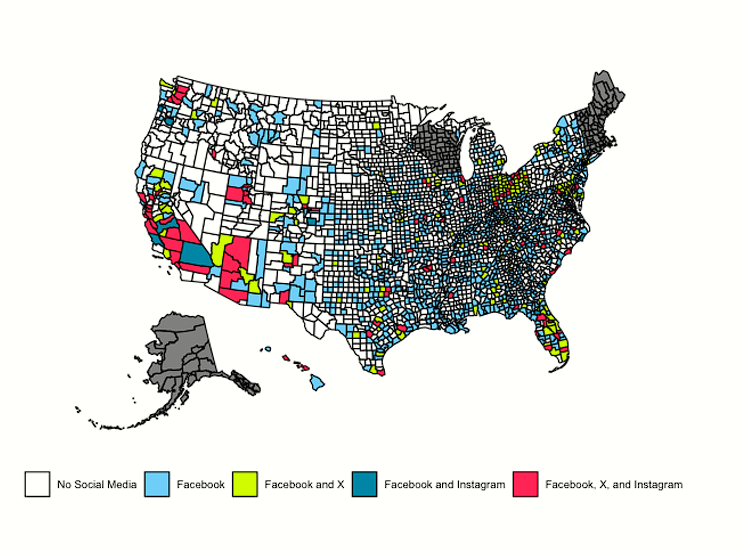
Figure 1. Usage of social media platforms by EOs for voter communications across the U.S.
With the assistance of student researchers, social media content was labeled using a hierarchical, nested taxonomy of election administration labels. These labels aim to capture what type of processes EOs communicate about, which communication strategies they use–misinformation-combatting, trust-building, get out the vote–what type of outreach they conduct offline and to which communities, and how they communicate about election security. We apply the trust-building label on content that intentionally communicates messages about trust in elections (Figure 2), as specified in national campaigns such as the National Association of Secretaries of State (NASS) #TrustedInfo campaign. These messages communicate that: election officials are trusted sources of information (Trust the source), election procedures are secure (Trust the process), and the people associated with running elections are professionals (Trust the people).
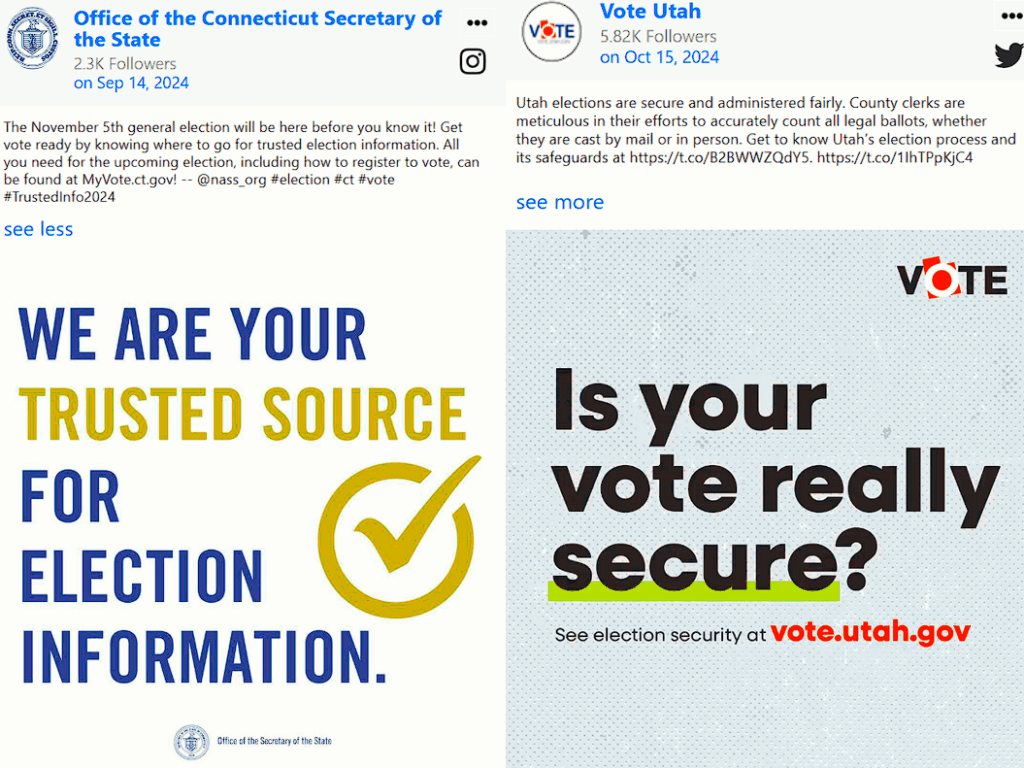
Figure 2. Examples of social media messaging from Office of the Connecticut Secretary of the State and Vote Utah focused on trust in elections.
Humans in The Loop: Identifying and Classifying Bipartisan Messages
We draw from communications labeled as “trust-building” (see Figure 3 for examples) to determine whether messages integrate bipartisan language when describing election procedures. This classification process is manual, as such messages were conveyed in multi-modal formats (text, video, images) and automatic labeling approaches did not adequately identify all relevant content.
Among 13,640 posts shared by state EOs across all tracked platforms, about 16.4% were labeled as “trust-building”, with 3.3% explicitly referencing bipartisan procedures. Local EOs’ trust-building messages took about 6.1% of all election-related content (46,600 posts in total), and less than 1% included bipartisan language. Election procedures referenced under this theme fell into six categories: voter list maintenance, poll workers and EOs, ballot processing, ballot proofing, mail ballot processing and signature verification, and post-election processes (audits and certification).
Even though the volume of trust-building–and bipartisan–messages is low compared to all election-related content that EOs disseminate to voters, the content of these communications uncover intentional messaging strategies that go beyond simply stating “elections are secure”. For instance, New York State Board of Election’s #12DaysOfElectionSecurity campaign notes that “voter lists are routinely maintained. This occurs year-round to ensure voter rolls are updated. The tasks are completed by bipartisan staff at each board of elections”. Similarly, Cuyahoga County, Ohio published standards of conduct emphasizing that EOs work in teams and engage with voters in a nonpartisan manner (Figure 3).
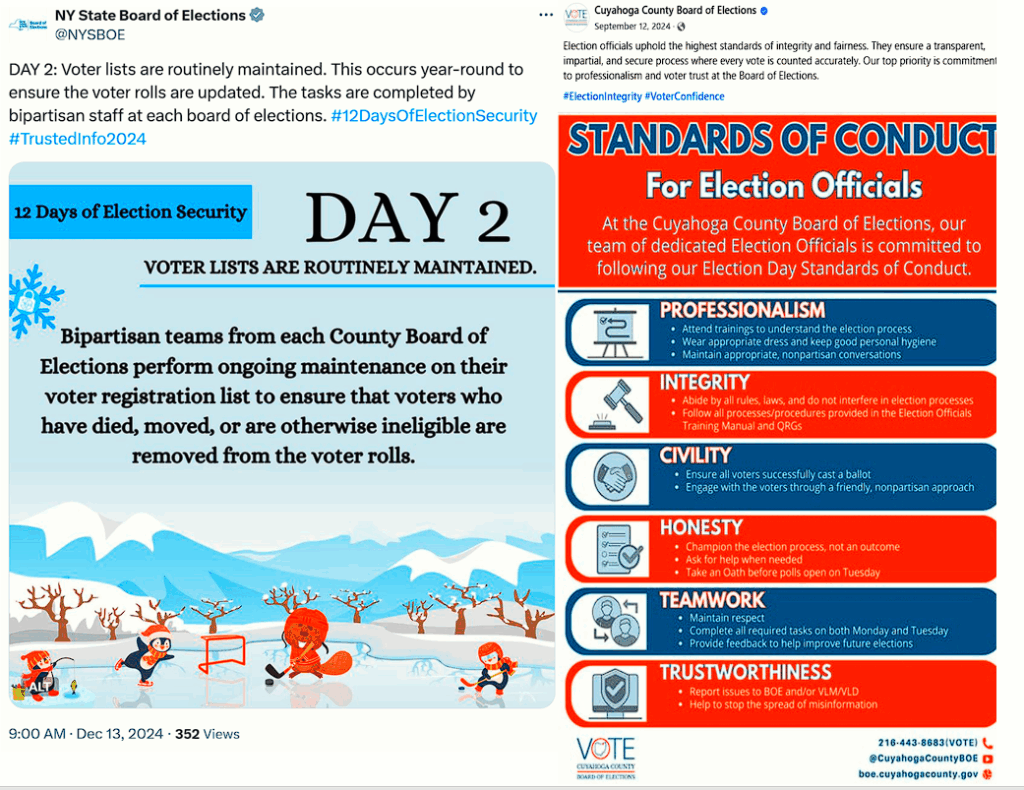
Figure 3. Examples of social media messaging from NY State Board of Elections and Cuyahoga County Board of Elections focused on specific aspects of election security and standards of conduct.
Can Bipartisanship Restore Public Trust in Elections?
While statutory requirements for bipartisan involvement exist throughout the election process, officials referenced only a fraction of these safeguards in their public communications during the 2024 Presidential election cycle. This suggests untapped potential for building public confidence by highlighting existing checks and balances in the election process that rely on bipartisan cooperation and oversight.
The Election Officials Communication Tracker data also show variation in messaging strategies across jurisdictions and platforms. Some officials lean heavily on process-based explanations, while others emphasize the people involved in election administration. Understanding these patterns can inform more effective, evidence-based communication strategies.
Thus far, experimental research shows that humanizing elections and educating voters about election procedures like audits can move the needle in building confidence in election results. The next step, therefore, is to experimentally test whether framing election integrity through a bipartisan lens reduces polarized attitudes about the accuracy of election results.