
2026 Summer Institute on Privacy Enhancing Technologies for Education Data
June 22 – June 24, 2026 in Washington, D.C.
Take part in the 2026 Summer Institute for hands-on learning about how to harness the power of privacy enhancing technologies (PETs) in education and workforce data.
Taking place at Georgetown University’s McCourt School of Public Policy in Washington, D.C., this three-day program offers a deep dive into PETs with advanced introductory sessions, demonstrations, problem-solving, and networking.
What’s On the Agenda? With expert speakers and practical sessions, we’ll unpack strategies for protecting student and worker privacy using PETs, cover techniques for strengthening your data infrastructure and share lessons from peer data-sharing efforts across the country. In order to meet growing demand from our SLDS colleagues, the Summer Institute program will feature two concurrent programming tracks: one geared toward PET newbies and another for those who are already well versed in PETs. We welcome you to attend whichever track best suits your organization’s needs.
Who Should Attend? The Institute is geared toward technical and policy staff at state education agencies and those working with SLDSs, who want to:
- Learn how to apply PETs to Statewide Longitudinal Data Systems (SLDS)
- Understand how PETs and AI intersect
- Explore the latest innovations in data privacy and governance
Why Attend? If you are working with SLDSs, this course will give you the information you need to get started with using PETs to secure highly sensitive, personal data and protect student and worker privacy.
A sneak peek into what we’ll cover:
- Stories of PETs in action in a range of fields, including education
- A deep dive into the different types of PETs and their use cases
- Demonstrations of using PETs to protect privacy when linking records, synthesizing data, publishing metrics and more
- Risk identification and mitigation strategies, legal considerations, and public engagement
About:
The Summer Institute is hosted by the Privacy Enhancing Technology initiative at the Massive Data Institute. Learn more about MDI’s PET initiative.
2026 Summer Institute Agenda
Speakers
Molly Abend, Maryland Longitudinal Data System (MLDS) Center

Molly Abend serves as the Data Management Coordinator for the Maryland Longitudinal Data System (MLDS) Center and is the Center’s liaison to the Maryland State Department of Education. In this capacity, she leads the MLDS Center’s data governance initiatives and oversees the secure loading, cleaning, and integration of complex state data collections. She has spent her career transforming raw data into actionable insights through performance management roles in the Baltimore City Mayor’s Office, where she supported operational improvements for the Fire Department and the Department of General Services, and by managing the Student Learning Objectives process for more than 5,000 staff at Baltimore City Public Schools. She also contributed to multiple education research studies funded by the United States Department of Education through a nonprofit based in Washington, DC. Molly holds an M.P.A. from the University of Baltimore and a B.A. from Goucher College. She is an avid collector of Baltimore Orioles memorabilia.
Kelsey Badger, The Ohio State University

Kelsey Badger is the Research Data Librarian and an assistant professor at The Ohio State University Libraries. In this role, she leads the Libraries’ initiatives for access, management, and stewardship of research data, whether it is produced by campus researchers, licensed or acquired by the Libraries, or openly available online. She specializes in practices that support scientific reproducibility and transparency, including federal funder requirements for data management and sharing. Previously, Badger has supported data management through positions in academia as well as state and federal government, including the Illinois Department of Children and Family Services and the U.S. Geological Survey.
Bethanne Barnes, Massive Data Institute

Bethanne Barnes is currently the Associate Director for the Massive Data Institute. She has over fifteen years of experience leading data and evidence-based policy initiatives across diverse federal agencies. As former Director of the Division of Data and Improvement–essentially the Chief Data Officer–at HHS’s Administration for Children and Families (ACF), she architected ACF’s comprehensive data strategy, established a data governance structure, provided technical assistance on privacy topics for over 60 human services programs. In her role as the first permanent leader of the Evidence Team at the White House Office of Management and Budget (OMB), she was instrumental in establishing the Commission on Evidence-Based Policymaking and the Interagency Council on Evaluation Policy. Throughout her time at OMB, she led development of dozens of tiered evidence, social impact bond, and data infrastructure initiatives across government, becoming recognized as an expert on wage data policy. Bethanne holds a Bachelor of Arts in Management from the Evergreen State College and a Master of Public Administration from the Evans School of Public Policy and Governance at the University of Washington.
Aaron Bean, Asemio

Aaron Bean is a passionate social entrepreneur with a history of building systems for community good. As Managing Partner of Asemio, a social enterprise headquartered in Tulsa, OK, he leads a team of technologists and consultants who are working to address complex, systemic problems facing our communities. From 2001-2007, he led technology teams focused on catalyzing the economic growth of the Cherokee Nation. Aaron left the Cherokee Nation to join Fortune 500 technology company EMC, where he developed an international growth strategy for its then-newly acquired platform, Avamar. In 2009, he joined the U.S. Peace Corps and spent two years in Kazakhstan volunteering with people with disabilities. In Kazakhstan, he produced a national festival focused on celebrating deaf culture, created the first-ever Russian Sign Language music video, and developed a curriculum for teaching sign language to the parents of deaf children. In 2013, Aaron co-founded Asemio, which he has grown into a national network of technology and data systems that combine science, human story, and collaborative action to improve the public health and economic wellbeing of the communities it serves.
Claire Bowen, Urban Institute
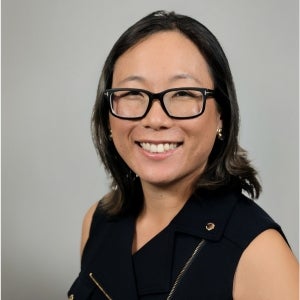
Claire McKay Bowen (she/her) is a senior fellow and leads the Data Governance and Privacy Team at the Urban Institute. Her research focuses on developing technical and policy solutions to safely expand access to confidential data for advancing evidence-based policymaking and ensuring everyone is responsibly represented in data. She also has an interest in improving science communication. In 2024, she became an American Statistical Association Fellow “for her significant contributions in the field of statistical data privacy, leadership activities in support of the profession, and commitment to mentoring the next generation of statisticians and data scientists.” Further, she is a member of the ICPSR Governing Council and several other data governance and data privacy committees as well as an adjunct professor at Stonehill College.
Alex Brodersen, Nebraska Statewide Workforce and Educational Reporting System (NSWERS)
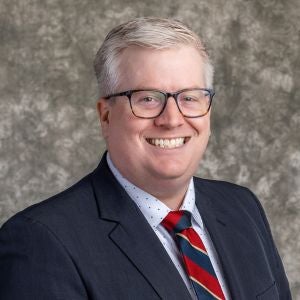
Alex Brodersen is Assistant Director for Research and Evaluation at the Nebraska Statewide Workforce and Educational Reporting System (NSWERS), where he leads research design, data analysis, and evaluation across a statewide P20W data system. He has over a decade of experience in educational measurement, data science, and integrated data systems, with prior roles in consulting and education technology. For the past three years, his work has focused on applying synthetic data approaches to support secure, privacy-preserving access to linked education and workforce data. He holds a master’s in computational statistics and a PhD in quantitative psychology from University of Notre Dame.
Vince Dorie, Massive Data Institute

Vince Dorie is a Senior Fellow at the Massive Data Institute where he works on privacy enhancing technologies and record linkage with Amy O’Hara. Prior to that he was a Principal Data Scientist at Code for America, where he assisted federal and state agencies in the design and delivery of social services. He received his PhD in statistics from Columbia University in 2014 and completed a postdoctoral training program at New York University’s department of Applied Statistics, Social Science, and Humanities in 2016, where he specialized in Bayesian non-parametric methods for causal inference.
Tricia Farris, AEM Corporation
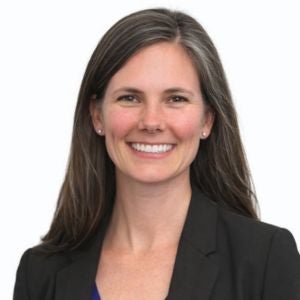
Tricia Farris leads national education data initiatives focused on data standards, system modernization, and interoperability. She is an accomplished team lead and program manager with 15 years of implementation experience in business process re-engineering, data governance, stakeholder engagement, requirement gathering, data analysis, and the systems development lifecycle. She paves the way for teams to share challenges, best practices, technology, and innovations in collaboration with non-profit partners through the leadership of national benchmarking and P-20W+ community efforts.
Scott Gaul, CT Office of Policy and Management

Scott Gaul is Chief Data Officer for the State of Connecticut, at the Office of Policy and Management, where he supports the state’s efforts to use data to inform policy and practice. At OPM, he has worked to develop the state’s strategy for data, improve access to open data resources, establish the first Geospatial Information Systems Office for Connecticut, expand the state’s integrated data efforts through DataLinkCT (formerly P20 WIN), develop policies and governance for responsible use of AI, and launch efforts to evaluate the impact of investments made with state and federal funds. Previously, Scott worked on research, evaluation and community indicators at the Hartford Foundation for Public Giving, the community foundation for the Greater Hartford region. Prior to that, he served as director of analysis in the Washington, D.C.-based Microfinance Information Exchange and worked for the World Bank, Mercy Corps, and Quantitative Risk Management. He holds a master’s degree in international affairs from Johns Hopkins and a bachelor’s degree in mathematics from the University of Chicago.
Beth Jarosz, Massive Data Institute

Beth Jarosz has more than 25 years of experience in understanding and communicating data nuance to help decisionmakers answer complex questions. Her career has spanned local government, academic, nonprofit, and contractor roles. Currently she is a Senior Fellow at the Massive Data Institute at Georgetown University, a collaborator on the dataindex.us project, and Vice President of the Association of Public Data Users.
Joseph Lam, University College London

Jo Lam is a Research Fellow at UCL Great Ormond Street Institute of Child Health. He is the PI for the Annual Household Income subdivided by Quintiles (AHIQ) project as part of Health Data Research UK Social and Environmental Determinants of Health Driver Programme. He completed his Wellcome Trust-funded PhD in Health Data Science and Statistics in 2025. His work focuses on data linkage quality, linkage bias, and the use of linked administrative data to improve health equity research, with particular expertise in evaluating linkage quality, data representativeness, and ethnicity-related bias.
He works closely with national data linkage partners, including ongoing collaboration with NHS England on linkage quality and data quality methods, leads linkage quality evaluation work with the UK Longitudinal Linkage Collaboration. He also chairs ITALO and SPRINT, UK national DARE UK-endorsed interest and focus groups working with NHS England and the Office for National Statistics focused on improving transparency, methods, and public engagement around data linkage quality.
Ngan MacDonald, Institute for Artificial Intelligence in Medicine at Northwestern University & Mathematica

Ngan MacDonald has spent over two decades at the intersection of data, technology, and healthcare — a journey that has taken her from consulting to the C-suite and from insurance to academia. Today she serves as Chief of Data Operations at Northwestern University’s Institute for AI in Medicine, Director of Data Innovation at Mathematica, and Executive Director of the Medical Research Analytics and Informatics Alliance (MRAIA). Along the way, she’s led enterprise data strategy at Blue Cross Blue Shield Association, built healthcare business solutions at HealthLX, and advised startups and health innovators at every stage. A Northwestern undergrad and DePaul MS grad, Ngan brings both technical depth and strategic vision to some of healthcare’s most complex data challenges.
Amy O’Hara, Massive Data Institute

Amy O’Hara is Director of the Massive Data Institute and Executive Director of the Federal Statistical Research Data Center at the McCourt School for Public Policy. She works on data governance, linkage, and privacy-preserving technologies. Her research focuses on population measurement, eviction and debt data, and methods to improve secure data access. O’Hara has published on topics including the measurement of income, longitudinal linkages to measure economic mobility, and the data infrastructure necessary to support government and academic research.
Nick Ramser, California Policy Lab

Nick Ramser is the Director of IT at The Ohio State University’s Center for Human Resource Research (CHRR). He oversees CHRR’s IT infrastructure, security and privacy program, and Secure Data Enclave. Most recently, he led the development and launch of the CHRR Data Repository, a generalist repository designed to host sensitive research data while complying with evolving federal data-sharing policies.
Andrew Rice, Education Analytics

Dr. Andrew Rice is the CEO and co-founder of Education Analytics, Wisconsin–based nonprofit that helps education systems use data, analytics, and technology to improve outcomes for students. His work sits at the intersection of AI, interoperability, education data structures, and data governance, with a focus on helping schools and agencies build systems they control rather than surrendering institutional memory and sensitive data to closed Ed-Tech and AI tools. He is particularly interested in how interoperable, well-governed data infrastructure can make AI more useful, secure, and accountable in education. Under his leadership, Education Analytics has helped design and implement large-scale data systems spanning millions of students and thousands of districts.
Dr. Rice also brings deep experience in accountability, applied research, and education policy. Over the course of his career, he has helped design state and local report cards, accountability metrics, and research frameworks that translate complex data into usable information for educators, policymakers, and the public. His work includes advising on accountability policy, metric design, and the responsible use of assessment data in public-sector decision-making. He serves on Ed-Fi’s Governance Advisory Team, the Ed-Tech Collaboratory advisory board and is a longtime advocate for interoperable, publicly accountable education data systems.
Baron Rodriguez, WestEd

Baron Rodriguez serves as the Vice President of Client Facing Technology, AI, and Compliance at WestEd. Baron most recently founded the Data Integration Support Center’s (DISC), a philanthropically funded center which provides security, privacy, architecture, and legal assistance to public agencies integrating data nationwide. Baron has over 20 years’ experience leading data integration efforts with a focus on privacy, architecture, security, and governance. His experience spans across government, non-profit, and commercial organizations and across sectors including education (all sectors), criminal justice, social service, workforce, and defense. Baron is a national expert on data privacy and holds an industry certification in privacy with the International Association of Privacy Professionals in GDPR. (CIPP/E)
Jeremy Seeman, Urban Institute

Jeremy Seeman is a Senior Research Associate in Data Governance and Privacy at the Urban Institute, an adjunct professor at the Inter-University Consortium for Political and Social Research (ICPSR) at the University of Michigan, and an affiliate faculty member of the Center for Ethics, Society, and Computing (ESC). Jeremy’s research focuses on technical and policy solutions for responsible data sharing, with an emphasis on deploying and governing privacy-enhancing technologies to responsibly expand access to sensitive public good data sources. His work has been featured in numerous interdisciplinary venues including statistics, computer science, law, philosophy, and policy. Jeremy’s work develops privacy-enhancing data sharing solutions including research methods, open-source software, governance strategies, and policy analyses. His work supports the missions of numerous public good organizations, including Federal Statistical Agencies like the National Science Foundation, U.S. Census Bureau, Internal Revenue Service, and the Bureau of Justice Statistics.
Joshua Snoke, Massive Data Institute

Joshua Snoke is a Senior Fellow in the Massive Data Institute. He researches statistical data privacy methods and applies these tools to enable policy solutions that increase data access while preserving privacy.
He has published technical papers and policy reports on the creation and evaluation of privacy-preserving techniques such as synthetic data, secure model estimation across multiple databases, and differentially private algorithms. His work, both privacy-related and otherwise, involves working with a variety of administrative and survey data, such as data from the U.S. Census Bureau, the Internal Revenue Service, the UK Administrative Data Research Network, the Defense Manpower Data Center, the American Educator Panels, the global Health and Retirement Studies, and the National Science Foundation.
Stephanie Straus, Massive Data Institute

Stephanie Straus is a Policy Fellow in the Massive Data Institute at the McCourt School of Public Policy. She helps governmental and administrative agencies increase their data use for research and evaluation purposes. Using the most appropriate and current privacy-enhancing technologies, Stephanie facilitates the linking of previously un-linked datasets to inform pressing policy issues across education, public health, and the civil justice system. Drawing from the social, computer, and data sciences, Stephanie advocates for secure data governance models that address the legal and regulatory risks involved with data sharing.
Michael Torrence, Motlow State Community College

Recognized as a strategist, connector, visionary, influencer, author and implementer, Dr. Michael Torrence, a front-runner in higher education throughout Tennessee and the nation, is the seventh-seated President of Motlow State Community College. Taking the helm as President in May 2018, Dr. Torrence has transformed Motlow State into an award-winning, innovative college year after year. He has masterfully blended the rural with the urban, all the while touching students and transforming communities one at a time. His leadership and vision have positioned Motlow on platforms and before audiences previously unknown to Motlow. He is a premier speaker and lecturer. Dr. Torrence is a technology strategist with more than 35 years of experience in higher education. He practices holistic development while creating space for the broader community. Included among his areas of expertise are Community, Economic, and Workforce Development, Research, Adult Education, Student Success, Academic Affairs, Professional Development, Distance Learning, and Success and Innovation. Additional interests are Artificial Intelligence (AI), Applied Learning with Open Education Resources (OER), Virtual Reality, Augmented Reality, Mixed Reality, Automation, Robotics, Mechatronics, and Gamification as platforms for education, learning, and training business and industry to increase efficiency and scalability. Dr. Torrence is also an entrepreneurial business development professional. Dr. Torrence earned a Ph.D. in Exceptional Learning (Literacy) from Tennessee Technological University in Cookeville, Tennessee. He serves on local, state, national, and international boards that influence and shape the future of higher education, including the American Association of Community Colleges Board, the Community Colleges of Appalachian Board of Directors, and the College Board’s Community College Advisory Panel. He is the recipient of numerous awards and was named a Distinguished Alumni by South Dakota State University, where he earned both his undergraduate and graduate degrees. He is a revered Maxine Smith Fellow and is one of only two Fellows appointed as a Community College President in the Tennessee Board of Regents–the College System of Tennessee, the system that governs community and technical colleges. Dr. Torrence is an Air Force veteran.
Katie Weaver Randall, Education Research and Data Center (ERDC)

Katie is a recognized leader in the use of P20W (early learning through workforce) data to inform research, policy, and practice. With experience spanning both applied research and system-level leadership, she brings deep expertise in leveraging integrated administrative data to improve outcomes across education and workforce pathways.
Katie is currently the Director of the Education Research and Data Center (ERDC), Washington state’s P20W organization. A central focus of the ERDC is expanding responsible access to P20W data while reducing barriers for researchers and partners. Under her leadership the ERDC team has developed and implemented governance frameworks that support secure, efficient, and transparent data sharing through mechanisms such as data enclaves and standardized data sharing agreements. Katie is particularly committed to streamlining access in ways that maintain strong privacy protections, minimize administrative burden, and enable timely, high-quality research.
Travel
FAQs
2025 Testimonials
I learned a lot at the conference: there is so much technical, social, and legal nuance when it comes to weighing the pros and cons of approaches to using data. Cryptographers tend to view problems through a lens of security, so I found it eye-opening to interact with folks who are so amazingly knowledgeable, aware of the landscape, and eager to rise up to the challenge of data sharing from different perspectives.
Steve Lu, CEO, Stealth Software Technologies
The mix of presenters and attendees was a great combination of researchers, policy folks, and practitioners. I felt like I learned just as much from the other attendees as the presenters.
Seth Taylor, Senior Data Analyst, Verite Educational Services
I had a fabulous and eye-opening experience at the inaugural Georgetown University’s McCourt School of Public Policy Massive Data Institute 2025 Summer Institute! We learned a ton about Privacy Enhancing Technologies (PETs) and how brilliant folks around the country are using them to safely and securely increase data accessibility and utility for researchers, policy makers, community members, and more!
Julie Neisler, Director of Quantitative Research & Data Science, Digital Promise